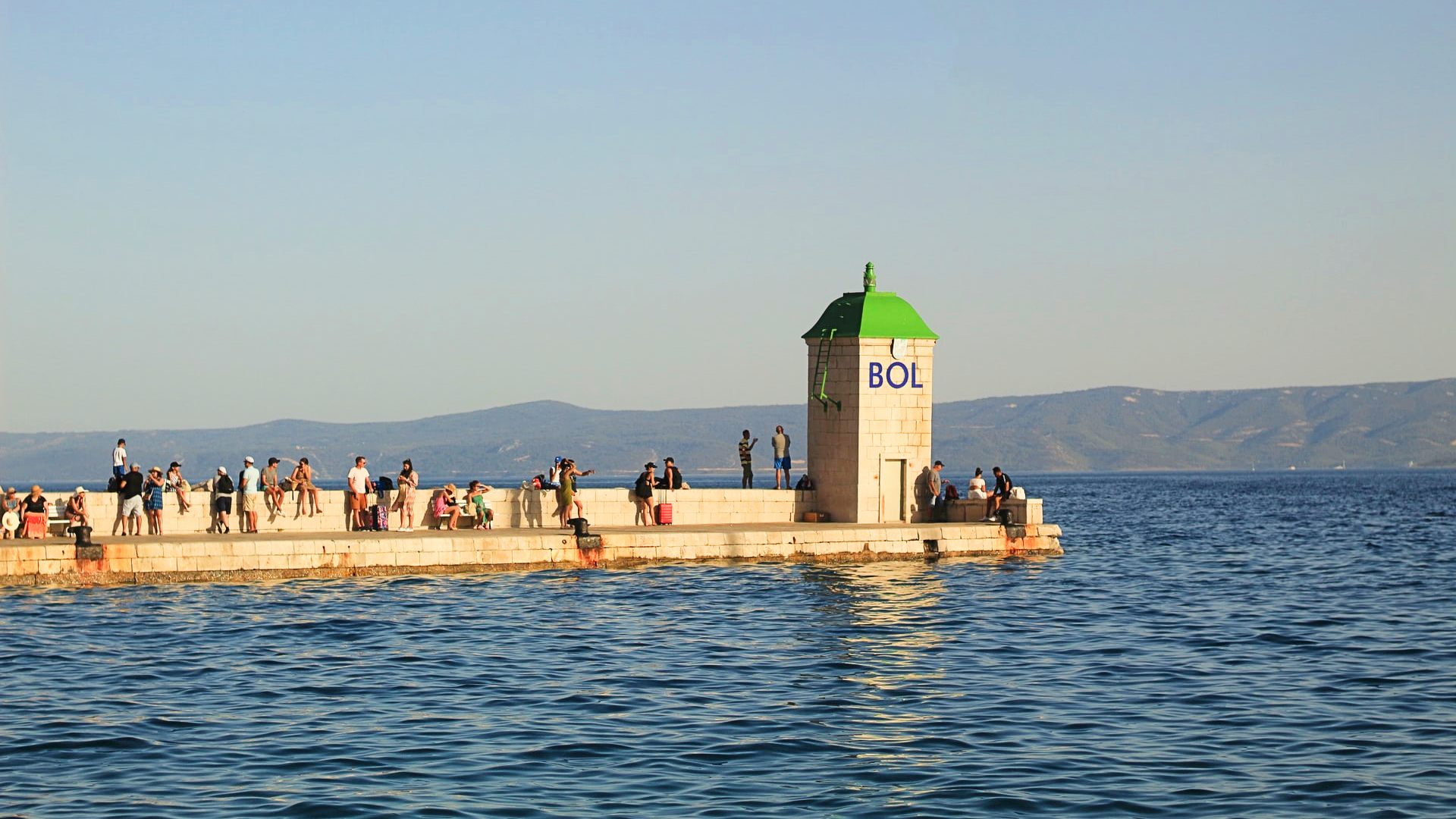
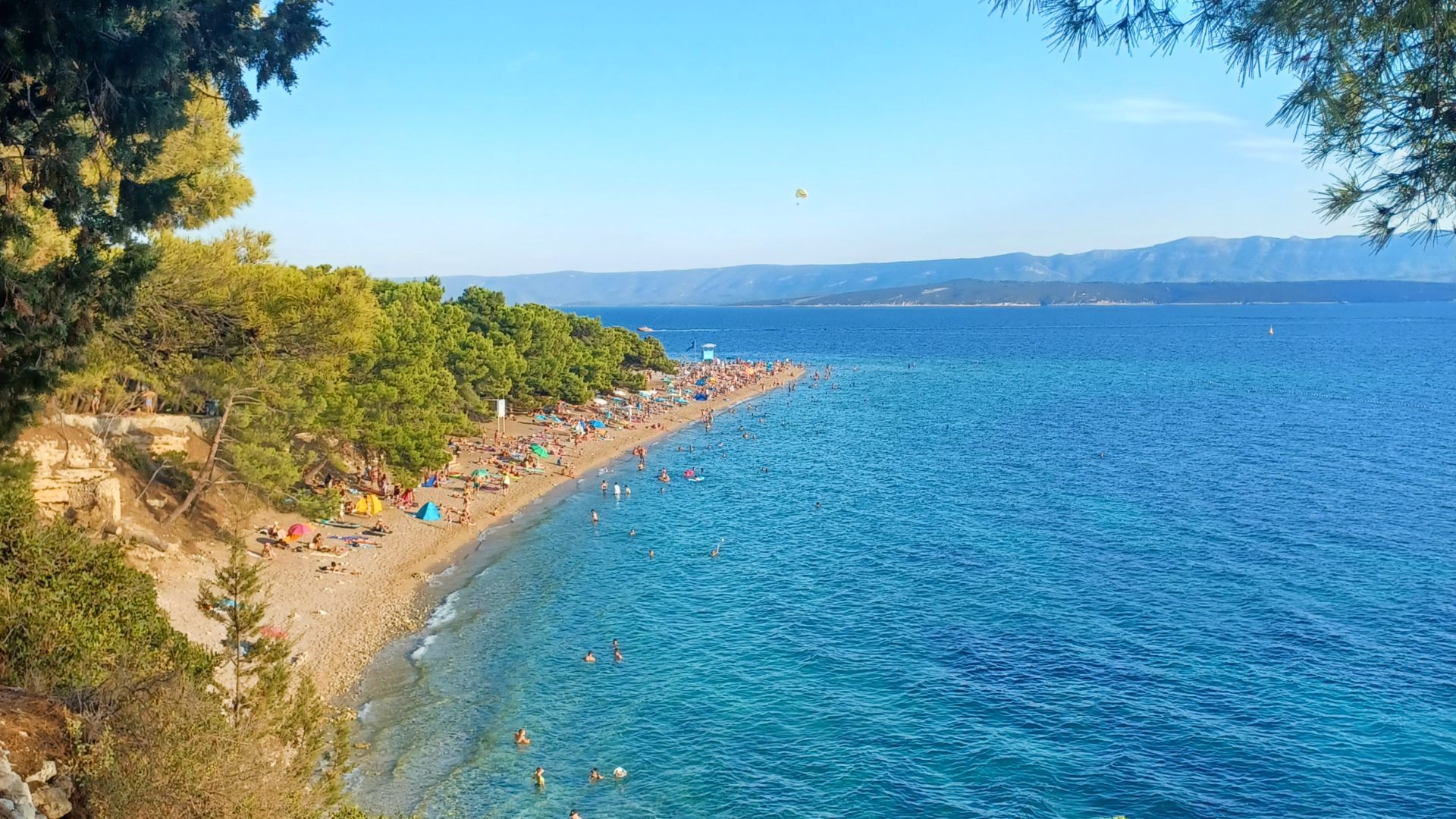
Bol is the most visited town on Brač, and it's easy to see why. Sitting on the southern coast of the island, with Vidova Gora rising directly above and the sea looking out toward Hvar, Bol has that rare combination of nature, active holidays and cultural depth that works for very different kinds of travellers. Zlatni Rat is the reason most people hear about Bol in the first place. But they stay for much more than one beach.
When to Visit Bol
Every season offers something different, so the answer depends on what you're looking for.
Best Time to Visit Brač - Monthly Weather and Average Temperatures
Spring and early autumn are ideal for exploring. Vidova Gora, Dragon's Cave, Blaca Hermitage, hiking trails and cycling around the island, all of it is available without summer heat and crowds. Some restaurants are already open or still running, but don't count on everything being fully operational as the season hasn't quite kicked in yet.
From mid-June to mid-September, Bol is in full swing. Beaches fill up, restaurants stay open late, and Bolsko lito brings almost daily events. July and August are the most alive but also the most crowded, especially around Zlatni Rat between 10 am and 5 pm.
September is our recommendation for anyone who can choose. The sea is still warm, crowds thin out, all the facilities are still open, and restaurants actually have free tables.
October feels like spring — good for outdoor activities, quiet and authentic. Just expect that some places will have already closed for the season.
First and most obvious is visiting Zlatni Rat beach, so we are not taking it into account, but we need to mention it.
Zlatni Rat - the Beach You Cannot Skip
No conversation about Bol is complete without Zlatni Rat. A pebble spit that reaches into the sea, shifts shape with the wind and currents, bordered by dense pine forest on one side and impossibly clear turquoise water on the other. For everything you need to know — parking, activities, windsurfing, when to arrive and what to bring — see our complete Zlatni Rat guide.
Other Beaches in Bol Worth Visiting
Martinica is the beach you should visit at least once. It sits right below the Dominican Monastery, has a particular Mediterranean atmosphere, and many visitors end up preferring it to Zlatni Rat — especially in the afternoon when a stronger wind often picks up on the Horn. Martinica stays calm.
Along the promenade from Bol's centre toward Zlatni Rat, a string of small urban beaches lines the shore — with beach bars, sunbeds and water sports rentals, all looking out toward Zlatni Rat. Borak is one of them. The walk to Zlatni Rat is already part of the experience.
Insider tip for those with a car or bike: a few kilometres west of Bol lies the small village of Murvica with its own beach of the same name. The whole area is dotted with small coves that are either completely empty or far less busy than anything in Bol. A short drive, a completely different atmosphere. More about Murvica beach.
Windsurfing and Kitesurfing in Bol
Bol is one of the leading windsurfing destinations in the Mediterranean, and that's not an accident. The channel between Brač and Hvar funnels the maestral, which reliably picks up in the afternoon on almost every summer day. For surfers, that means predictable conditions. For swimmers who prefer calm water, it means mornings are a much better choice.
In the morning, the sea is flat and ideal for beginners. By afternoon, when the maestral strengthens, the more experienced surfers take over.
Several schools and rental centres are based at Borak beach: Big Blue Sport, Active Bol, Johnny's Windy Way and Yellow Cat Kiteboarding. All offer beginner courses — no previous experience needed.
Water Sports and Activities at Zlatni Rat
Zlatni Rat is far more active than it looks in photos. Beyond windsurfing and kitesurfing, you can rent SUP boards and kayaks on the beach — we especially recommend going out early in the morning when the sea is still, and the view of the cape from the water is genuinely impressive.
For families with children, there's the Wibit floating water park, an inflatable course set on the sea with obstacles, slides and climbing frames. Prices run around €15 for 30 minutes. It fills up in peak season, so get there early.
For a bit of adrenaline, there's parasailing (launched from a boat, tandem option available — from the air, you finally understand just how unusual Zlatni Rat's shape really is), banana boat, jet ski and towed rides. For diving, the Big Blue Diving Centre offers courses and guided dives for all levels.
Hiking Vidova Gora - the Highest Peak on All Adriatic Islands
Vidova Gora stands at 778 metres, making it the highest point on any Adriatic island. On a clear day, you can see all the way to Italy.
The trail from Bol covers 5 km and climbs 770 metres. With decent fitness, allow around 1.5 hours from the starting point above town. It's a demanding hike and not for those in poor physical condition — start early, bring plenty of water and wear shoes with a solid sole as the terrain is rocky.
At the summit, a small drinks and snacks stand operates during the season, but it's better to bring everything you need just in case.
On the way, make sure to stop at Trolokve — three natural water basins just below the peak. At first glance, they look like simple ponds, but these are ancient structures where natural depressions in the terrain were carefully shaped and lined with waterproof clay to collect rainwater. On an island where fresh water has always been scarce, places like this were essential for people and livestock alike. Sheep still graze around Trolokve today, and it's not unusual to come across a group of horses moving freely across the plateau. One of the basins is enclosed by a dry-stone wall — a quiet reminder of how carefully every drop of water was once protected.
An alternative to hiking is driving or cycling to the top.
Dragon's Cave - the Most Intriguing Excursion near Bol
Dragon's Cave is hidden high on the southern slopes of Brač, about 300 metres above the village of Murvica, 7 km from Bol. The cave is barely 20 metres long and divided into three sections: a small chapel with an altar carved into the rock, rooms that served as monks' cells, and an interior with stone reliefs that mix Slavic mythology with Christian iconography.
The first written records date to the 16th century, when a monk named Juraj Dubravčić, fleeing the Ottomans, established a hermitage inside the cave. From that period comes a rare Glagolitic missal from 1483, now kept in the Museum of the Dominican Monastery in Bol.
One important note: entry is only possible with a guide. Without a prior reservation, there is no access — this is not a standard disclaimer, but a real situation that can ruin plans if you ignore it. On the path to the cave, you pass through Stina's vineyards with views of Zlatni Rat and Hvar stretching out below.
For full details on getting there, the history and how to book a guide, see our Dragon's Cave guide.
Stina Winery - Wine Tasting by the Sea
Stina winery stands right on Bol's waterfront, in the building of the First Dalmatian Wine Cooperative from 1903. "Stina" is the Dalmatian word for stone, and the whole philosophy of the winery is built on that idea — hard work on Brač's sparse, stone-riddled land.
The winery owns around 50 hectares of vineyards and produces two wine lines. The Stina line focuses on indigenous varieties: pošip, vugava and opol. Vina Brač 1903 combines indigenous and international varieties.
At the tables along the waterfront, you can order aperitifs, wine, local prosciutto, cheese, olives and bread from the afternoon until late at night. Guided tastings offer 2 to 4 wines with food accompanied by a sommelier — places are limited, so book in advance.
Cultural Sights in Bol
Bol's centre blends old Mediterranean architecture with open spaces where local life actually happens. Make sure to visit the market in the heart of town — that's where you get the real feel of the place and can buy local products directly from the people who make them.
House in a House is a local curiosity in the old quarter, tied to a legend about a conflict between two families. Branislav Dešković Gallery occupies a Renaissance-Baroque palace right on the seafront and holds one of the more representative collections of modern Croatian art. The large dog statue at the entrance is hard to miss. Dominican Monastery, dating from the 15th century, sits on the Glavica peninsula about ten minutes' walk from the centre, with a museum inside holding prehistoric and historical finds — including the Glagolitic missal from Dragon's Cave.
Bolsko Lito - the Summer Cultural Programme
From June through October, the Bol Cultural Centre organises an almost daily programme of concerts, theatre performances, exhibitions, jazz evenings and local celebrations. Bol Day on 5 August is the biggest single-day event of the year. For the programme and current dates, see our Bol Summer Festival page.
Where to Eat in Bol
Bol's waterfront is lined with restaurants that run at full capacity through the season with barely a free table. Our recommendations are a little further out.
Where to eat on Brač: 10 restaurants you absolutely can't-miss
In Gornji Humac, a village a few kilometres from Bol, two places are worth a special mention. Konoba Tomić is a rustic spot with excellent local cooking: prosciutto, cheese, vitalac, spit-roasted lamb and dishes prepared under the peka. Restaurant Nono Ban offers a similar local repertoire in a slightly more contemporary style.
Nightlife in Bol
Bol has a lively summer atmosphere, but it is still far more relaxed than Hvar. In the evening, life moves to the waterfront promenade — seaside walks, aperitifs, music coming from the bars, and traditional klapa singing that can often be heard through the town centre.
For cocktails and a relaxed evening, Varadero is one of the best-known spots in the centre of Bol. Located right by the sea, with a spacious terrace and music that becomes livelier later in the evening, it is a place where many people end up after dinner. Near Zlatni Rat, Auro Cocktail Bar is another popular choice for drinks by the sea after a beach day.
If you are looking for a proper night out with DJs, dancing, and a louder atmosphere, there is 585 Club, an open-air summer club located just a few minutes’ walk from Zlatni Rat. The club has both indoor and outdoor areas, regular DJ performances, and attracts a younger crowd during the peak summer season, especially during larger events like Yacht Week. By Bol standards, it is a serious nightclub.
Take a boat tour to Hvar or Modra Spilja
Explore the beautiful coast of Brač and nearby islands on a boat tour. Several companies offer half-day or full-day tours with stops for swimming and sightseeing.
The most popular destinations are definitely island Hvar and Blue Cave, a waterlogged sea cave located on the island of Biševo.
How to Get to Bol
From Split, you have two options. The ferry to Supetar takes 45 minutes, from where you continue to Bol by car, taxi or bus through the middle of the island — around two hours in total. Or the seasonal catamaran that goes directly from Split to Bol in about an hour. For a day trip from Split, the catamaran is by far the fastest and most practical option.
Full details on ferry lines, timetables and prices are in our guide to ferry connections to Brač.
Practical Tips for Visiting Bol
Bol is a small town and perfectly manageable on foot — the centre, waterfront and beaches are all walkable. A car is useful if you plan to explore the surroundings or head out to Gornji Humac.
Parking in Bol in July and August can be a challenge, especially near the centre. Come early or leave the car a bit further out and walk.
ATMs and card payments are no problem. Mobile coverage is good. Dogs are not allowed on Zlatni Rat, but a dog-friendly beach is a few minutes west of the main stretch.
One thing most visitors don't know: the promenade from Bol's centre to Zlatni Rat runs almost entirely through shaded pine forest, so the walk is comfortable even on the hottest days.